Overview
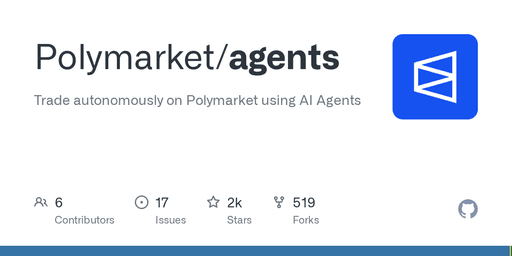
When evaluating developer tools in the Polymarket ecosystem, the comparison of Polymarket Agents (GitHub) vs Polymarket Builder Codes reveals two distinct approaches to building on top of the world's largest prediction market platform. Polymarket Agents is an open-source framework hosted on GitHub designed to help developers construct AI-powered trading agents capable of discovering markets, gathering contextual information, forming trading theses, and executing trades autonomously on Polymarket. Both tools are currently listed as coming soon, meaning full feature sets and documentation may still be evolving at the time of writing.
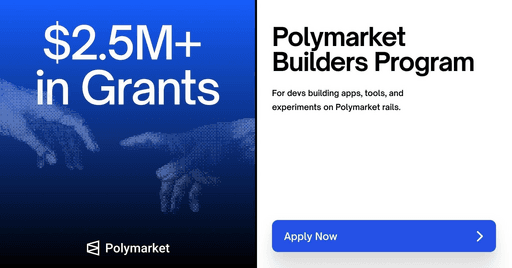
Polymarket Builder Codes, accessible at builders.polymarket.com, is a program that grants third-party applications access to Polymarket's orderbooks, markets, and liquidity through builder integrations. Rather than focusing on AI-driven automation, it targets developers and businesses looking to embed or surface Polymarket data and trading functionality within their own products. Together, these tools represent two complementary but fundamentally different entry points into the Polymarket developer ecosystem.
Polymarket Agents (GitHub) vs Polymarket Builder Codes: Key Differences
| Category | Polymarket Agents (GitHub) | Polymarket Builder Codes |
|---|---|---|
| Primary Function | Framework for building AI agents that research and trade on Polymarket autonomously | Program enabling third-party apps to access Polymarket orderbooks, markets, and liquidity |
| Target User | AI/ML developers, quant researchers, and open-source contributors building autonomous trading systems | Product builders, startups, and businesses wanting to integrate Polymarket data into their own applications |
| Platform / Interface | GitHub repository (open-source codebase) | Web portal and API access via builders.polymarket.com |
| Automation Level | High — designed for end-to-end autonomous agent workflows including market discovery and trade execution | Variable — provides raw API/orderbook access; automation depends on the builder's own implementation |
| Pricing | Open source; free to use under the project's license terms | Not publicly specified; likely governed by builder program terms and conditions |
| Key Strength | AI-native, opinionated framework for agent-driven prediction market participation | Direct, structured access to Polymarket's core liquidity and market infrastructure for product integrations |
| Best For | Developers experimenting with autonomous AI trading agents and open-source prediction market research | Developers building consumer-facing or institutional products that surface Polymarket markets and data |
When to Choose Polymarket Agents (GitHub)
Polymarket Agents is the better fit if your primary interest is in autonomous, AI-driven interaction with prediction markets. Because it is open source and hosted on GitHub, it offers maximum transparency and flexibility for developers who want to inspect, modify, and extend the underlying code. It is particularly well-suited for researchers and engineers experimenting at the intersection of large language models and prediction market trading, though prospective users should be aware the project is still listed as coming soon and the codebase may not yet be production-ready.
- You want to build an AI agent that can independently discover, analyze, and trade on Polymarket markets without constant human intervention.
- You value open-source transparency and want to contribute to or customize the framework for your own research or trading strategies.
- Your use case is primarily internal or experimental rather than a customer-facing product integration.
When to Choose Polymarket Builder Codes
Polymarket Builder Codes is the more appropriate choice when your goal is to integrate Polymarket's market data, orderbooks, or liquidity directly into a product you are building for others. Rather than prescribing how you interact with the data, it provides the access layer and leaves implementation decisions to the developer. Like Polymarket Agents, it is currently listed as coming soon, so developers should monitor the official builders portal for updates on availability and terms before planning a production roadmap around it.
- You are building a third-party application — such as a news platform, analytics dashboard, or trading interface — that needs live access to Polymarket markets and orderbook data.
- You need a formal program structure with defined integration terms rather than a self-directed open-source framework.
- Your product requires reliable access to Polymarket liquidity for user-facing trading features rather than autonomous agent behavior.
Verdict
Polymarket Agents and Polymarket Builder Codes serve genuinely different developer needs and are not direct competitors. If you are an AI researcher or developer looking to experiment with autonomous prediction market agents, Polymarket Agents is the natural starting point — provided you are comfortable working with an open-source project that is still maturing. If you are a product builder seeking structured, programmatic access to Polymarket's core market infrastructure for a user-facing application, Builder Codes is the more appropriate path. Since both tools carry a coming-soon status, the honest recommendation is to watch both repositories and portals closely, avoid building critical production dependencies on either until they reach a stable